5 Wellness Trends I'm Currently Hating On

Ok friends, I’m confident to say that you’re probably like me, getting bombarded with a ton of ads online of influences pushing the latest and greatest fads. But it’s not limited to the internet, it’s your aunt Jenny, and co-worker Steve, they are all inadvertently ‘selling’ you something that they are excited about that has ‘changed their life’ when it comes to their gym, diet, or another lifestyle factor.
So today we're diving into some of the wellness trends my clients are getting hit with and ask me about on the regular, plus a few things I've been side-eyeing in this space.
Let's boogie 💃
#1: Protein in Everything
Protein cereal. Protein chips. Protein cookies, pasta, Snickers bars, Pop-Tarts, candy, soda, and even water…freaking WATER!!
Protein has made its way into literally everything. Well, everything that comes in a package at least...
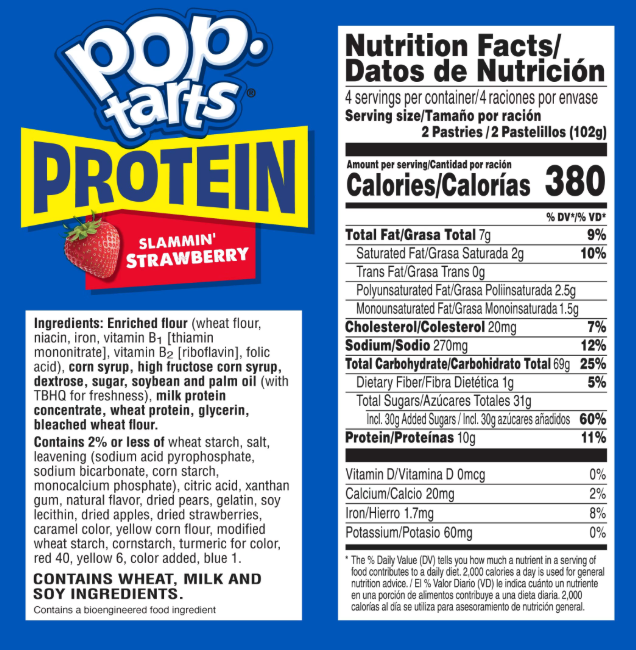
30g of added sugar for a measly 10g of potein..no thanks.
Let me put on a tinfoil hat for a sec and get on my soapbox, because this is a TEXTBOOK example of how big food manufacturers take something that's supposed to be genuinely healthy and shitify it beyond recognition.

Ugh! And just to be clear, I have zero beef with protein (tehehe), and if you ask any of my clients, I am absolutely a protein pusher. But the protein I recommend looks like this: poultry, eggs, yogurt, cottage cheese, seafood, tofu, red meat.
The protein crammed into all those packaged products? It's a different story. We're talking cheap byproducts of the dairy industry, or plant-based proteins like pea protein that are difficult to digest and have poor bioavailability. And don't even get me started on the marketing. Slapping "Protein!" on a label when the serving contains a measly 7 grams should be a crime.
The bigger issue is that these products are stuffed with additives, thickeners, stabilizers, artificial sweeteners, or approximately 10 different types of sugar, and they often contain significantly more carbs than protein. That's NOT a protein product… ok tinfoil hat off 😬.
And people are buying it. I see it at the grocery store. I've seen it in food logs from my days working in a clinical setting. And it’s not to blame the consumer, the marketing makes it appealing and FEELS like you’re missing out on something if you don’t partake.
What to try instead: Eat mostly real food. That’s IT!
Protein is the building block of our cells and crucial to maintain lean muscle tissue, which we lose as we age. The bioavailable protein, essential amino acids, collagen, and nutrient density you actually need comes from real sources previously mentioned, but I’ll reiterate it again: fish, poultry, red meat, tofu, eggs, and dairy.
Are protein bars and cookies convenient? Sure. But in my opinion, it’s no more convenient than plain yogurt with berries, a couple of hard-boiled eggs, or some cottage cheese. Less exciting? Absolutely. Better for your health and that ever-so-popular topic of longevity? Without question.
It doesn't mean you can never enjoy those things, however if packaged protein products make up the bulk of your daily intake, this might be worthwhile shifting that ratio toward sources that come from non-processed foods.
#2: Fiber-Maxxing
Fiber is the hot new obsession. And, honestly, rightfully so, because 95% of Americans don't meet the recommended daily fiber target (source), which is 14g per 1,000 calories. Which means, if you're eating roughly 2,000 calories a day, you should be getting around ~28 grams of fiber.

With that, the spirit of this trend is actually good. The focus on vegetables, healthy starches, beans, and legumes? Awesome, LOVE THIS. Buuuuttttttt, say it with me, big food brands are starting to capitalize on it, and here we go again…tinfoil hat is back on!
We're already seeing it with shelf-stable staples like Fiber One and Belvita biscuits. And now we have products like Olipop and Poppi, the trendy prebiotic fiber drinks that are very convenient but are not (at least yet) backed by solid data on actual health outcomes.
What I do know from working with clients is that people with gut sensitivities who drink these beverages tend to end up bloated and gassy. Which, again, is not the outcome anyone was going for. Of course, everyone is different and maybe half of one or a full can doesn’t disrupt your GI system but there are folks that are much more sensitive to these added pre and probiotic fibers, yet they might think this is something that's "healthy" for them.
Here's the nuance that this trend completely ignores: a high-fiber diet is not universally appropriate. GASP 😱! Consider this, if someone jumps from 8 grams of fiber per day to 40 grams overnight, they are going to have a very bad time. Constipation, hard stools, and general digestive chaos will ensue..

Take oligosaccharides as an example, a category of carbohydrates that humans can't absorb because we lack the enzymes to break them down. This is why eating beans gives most people truly spectacular gas. The state of your gut health will dictate how severe that experience is, which is precisely why blanket advice to "eat more fiber!" is not the same as good advice.
What to try instead: Get your fiber mostly from whole, nutrient-dense sources: non-starchy vegetables (think green beans, broccoli, asparagus, zucchini, mushrooms, peppers, etc.), some starches (whether from veggies, grains, or fruit), and a modest amount of beans and legumes as tolerated.
And start slowwww, try adding one extra serving of non-starchy vegetables to your day and increase your water intake alongside it. Fiber without adequate hydration is how things get... backed up. No one want that.
#3: Vibration Plates
It’s my prediction that this one will be rather short-lived. It's giving...shake-weight vibes...Does anyone remember those?

If you haven't heard of vibration plates yet, congrats! But in case you don't, they are an at-home device that vibrates beneath you and has bold claims to enhance muscle activation, boost blood flow, stimulate lymphatic drainage, improve balance, and support bone density.
I remember these things from when I grew up in Russia in the '90s, my grandma would go to a clinic type place that offered them as a weight-loss tool. Sadly, things aren’t much different 30 years later...

Vibration plates were actually developed in the 60’s for use by Russians for cosmonauts going into space to slow down muscle atrophy in space, and later adopted by Olympic athletes to squeeze out tiny performance gains. And in those contexts… where the difference between gold and silver might be fractions of a second and not withering away in freakin' space, marginal improvements matter. For the rest of us? There are way better options to do this.
Also, these gizmos can set you back anywhere from $50 for a cheap Amazon version to $500 or more. And the kicker? The studies that observe results from vibrating plates are marginal and were always accompanied with either a caloric deficit, strength training, or combination. Who would have thought?!
Lastly, it just feels gimmicky and predatory, because it's often marketed to people who are desperate for something to work. That's a common pattern across a lot of fitness gadgets and supplements, and it 👏 frustrates 👏 me 👏 every 👏 time.
What to try instead: Walk. Jump. Dance. JUST MOVE your body in literally any way. All of it promotes lymphatic circulation, strengthens bones, and contracts muscle and it costs exactly zero dollars. So put on some tunes and bust out some moves!
#4: Peptides
Let's start with the basics of what the heck peptides are: they are strings of amino acids, the same (just smaller) "building blocks" that make up proteins, which in turn make up all of our cells and do all kinds of stuff in the body, everything from hormone regulation, immune system function, tissue repair, digestive process, etc.
There are oral peptides that are widely available and generally considered safe, like collagen, which has reasonable evidence supporting benefits for joint and skin health, although the effect is generally helped with maintaining other healthy lifestyle choices, again, I know, shocker!
And then there are prescription grade, FDA approved types of peptides, like GLP-1, yep, that’s exactly what Ozempic and Wegovy are (glucagon-like peptide 1) . Which is an injection that targets a specific biological process, in this case regulating glucose levels, slowing down gastric emptying which in turn suppresses the appetite.
I do not have a problem with this kind of thing per sé, as it can be a helpful tool to treat some medical conditions (although I do have thoughts on it, but let’s save that for another time). The category I'm more skeptical of… and the one blowing up all over the internet.. is grey market injectable peptides.
There are claims that these peptides can help to accelerate injury recovery, improve weight management, increase lean muscle mass, and enhance skin rejuvenation, among others.
In my research on this topic I picked a completely random peptide to do a deep dive on, I landed on BPC-157, or Body Protection Compound-157. This is a synthetic peptide derived from gastric juice. It's been heavily studied in animal models for its potential to accelerate healing of tendons, ligaments, and muscles, however, it currently lacks large-scale human clinical trials. It is not FDA-approved. It is completely banned by the World Anti-Doping Agency (WADA) and various military and defense agencies.
I'm not dismissing peptides entirely. Plenty of people have experienced meaningful changes when nothing else worked. But here are my two big concerns:
Sourcing is sketchy. These products are incredibly easy to obtain, often with zero physician oversight… just use the code from your favorite influencer's latest sponsored post. Independent labs and consumer watchdog organizations are increasingly finding toxic levels of heavy metals like lead and arsenic in gray market peptide products. Many are mislabeled and contaminated, which isn't unique to peptides,it's a systemic problem across the supplement industry.
Intention matters. Whether it's for joint health, weight loss, skin, or injury recovery…. are we looking for another quick fix? A way to bypass eating well, exercising, doing proper rehab post injury, drinking enough water, and being honest about our habits around alcohol, tobacco, or excess calories? That's worth sitting with.
What to try instead: Focusing on the foundational work first: sleep, movement, hydration, nutrition, healthy coping skills. And if you're genuinely doing all of that and still considering injectable peptides, scrutinize the sourcing: is it third-party tested? Can you see a certificate of analysis? Are you working with a clinician who has actual experience with these compounds?
If it sounds too good to be true, it probably is...
#5: Optimizing Everything
And lastly….let’s dive in on the relentless pursuit of the perfect routine. I’m personally working on letting go of maximizing every waking minute for productivity and efficiency. The grind, grind, grind mentality, I’m not a freaking blender!
The thing that prompted me to simmer on this was a financial and business YouTube video, where the host said something to the effect of: "If you have any downtime, like driving to work or working out, don't waste it on useless things like the same playlist you've been listening to for two years. Listen to a finance audiobook. Consume content that will get you to the next level."
I'm genuinely frustrated at this "advice".
There is nothing wrong with listening to your cringey pump-up playlist for the 2,000th time. The fact that you showed up at the gym …. IS enough. Having routine and structure is good. Consistency with those things will always outperform intensity. It's the need to intensify that creates internal distress and may lead to burnout, dissatisfaction, or a sense of apathy.
When we become so rigid that our routines turn into ritualistic behaviors, I’m talking about the ones that cause genuine mental distress if we can't complete them- that's when optimization tips over into toxicity. When everything is optimized, we lose the ability to flow with life. We create resistance instead of ease. We stop getting bored, which means we stop creating, exploring, making unexpected connections, and having conversations that go nowhere useful but are somehow the best part of the day.
If we're always doing, doing, doing and never slow down enough to simply BE. We are human BEings, not human doings, after all.
What to try instead: Examine your life without judgment and find somewhere to do less.
I'll be real with you, this one hits close to home for me. I've always been an optimizer, and I rarely get bored because there's always something to do. But I'm actively working on creating moments where I just... don't do anything. And sitting with that. Being okay knowing that not everything will get done.
Maybe that's the wellness trend we actually need:
spending more time BEing and less time doing
If you want to see this in a video format, here’s the link to the YouTube video:
5 Wellness Trends That Suck
Make healthy choices!!
Your Healthy Habit Helper,
Maria

Comments